By Mike Frisch and the Fishing the Midwest Team
For this open water loving angler it’s hard to come to the realization that just a few days remain in the 2025 fishing season. Rather than focus on what’s mostly in the past, however, I am choosing to stay focused on the future and what fishing days I have left. For me, the last few open water fishing trips of the season probably will include largemouth bass.
I am blessed to live near Alexandria, MN, and world class largemouth bass fishing. There are lots of other places in the Midwest with outstanding largemouth fishing too. Regardless the region fished, when choosing a lake for late fall fishing I prefer deep, clear waters that are prime for growing lush weeds during summer that are home to abundant largemouth bass populations.
The weed growth usually starts on shoreline flats and other shallow structure and extends down the structure’s drop-off edges. These weeds start to die during late summer and the process continues as fall progresses. As this happens, remaining “edge weeds” that are still green become the proverbial “spot on the spot” drawing baitfish and gamefish including bass, walleyes, and northern pike.
When targeting deep weeds in fall, I grab a couple rods, both rigged with moving baits. For years my go to bait for this situation has been a deep diving crankbait in a “match the hatch” color pattern. Recently, I have added a vibrating swim jig to my arsenal.
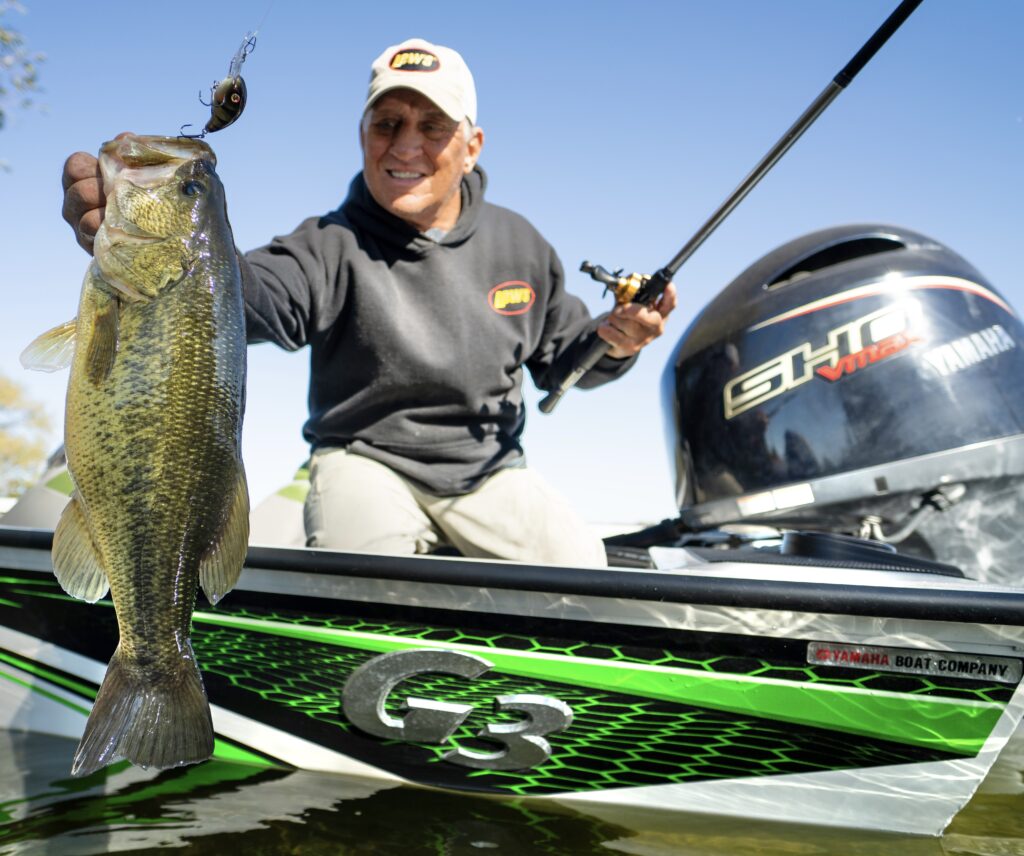
A 5XD Elite crankbait in the sunny or pro phantom perch pattern has been my go-to bait most days. This bait dives to around 15 feet, which is perfect for most waters I fish, and has a wobble and action that triggers lots of bites. The past two falls I have added a ¾-ounce green pumpkin Tungsten Thunder Cricket vibrating swim jig tipped with a similarly colored Blade Minnow trailer to my late fall arsenal.
My simple strategy when fishing these baits involves holding the boat just out from the weed edge, using my trolling motor to parallel that edge, and making long angled casts ahead and to the weedline. With the crankbait I try to parallel the weed edge, with the bladed swim jig I may cast more up onto the flat.
I cast and move along the weed edge looking for bass and the presence of lush, green weeds. When a bass is caught or “good” weeds are seen, I slow up and make several more casts as the fish are usually schooling now.
An important part of this pattern is the use of the right rods, reels, and fishing lines. Bass tournament fishing legend Kevin VanDam worked with Lew’s to design technique-specific rods just released this fall that I have been using for my recent fishing. The KVD Elite rods feature a 7’10” medium/deep crankbait rod, perfect for the Elite 5XD, and another 7’2” model designed for vibrating jigs. These rods allow for the long casts, important for covering water in fall, and have moderate actions allowing bass to fully “get” a moving bait and providing forgiveness to keep them hooked when they surge and fight.
Since slower retrieves work with these baits, I pair the rods with the new matching KVD Elite baitcast reels in a 6.2:1 gear ratio. I spool with 12-pound test CONTRA fluorocarbon line for cranking, going with 17-pound CONTRA on the vibrating jig rod. Fluorocarbon lines have less stretch than monofilament which helps with positive hooksets on long casts and they are also nearly invisible under water.
If more hooksets are on your late fall bucket list, consider a trip to your favorite bass lake, put some of the tips just offered to use, and hopefully you can enjoy some action-packed last chance bassin’!
Mike Frisch hosts the popular Fishing the Midwest TV series. Visit www.fishingthemidwest.com to see more fishing tips and view recent TV episodes as well!
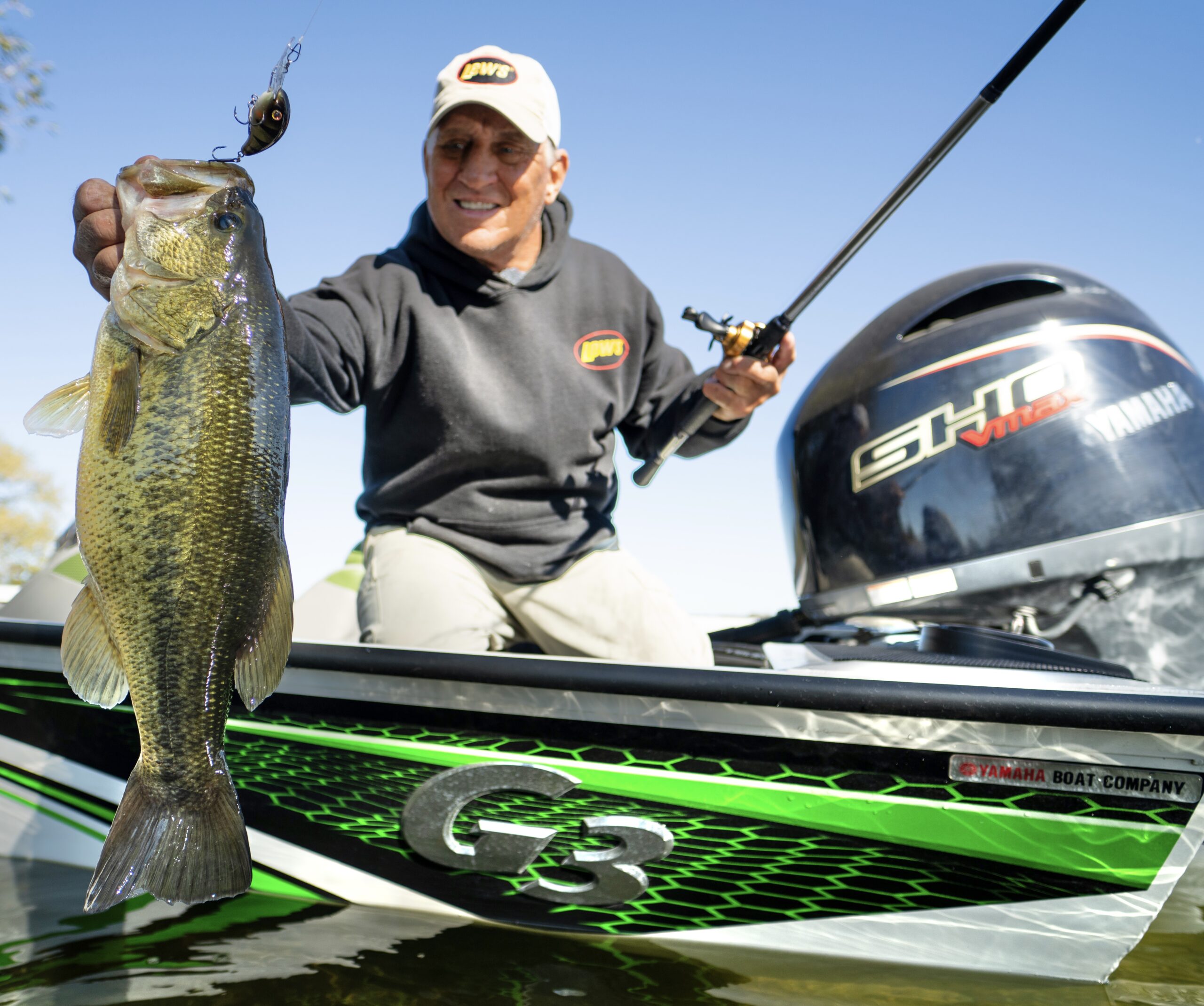
Photo – Mike Frisch with a fall largemouth bass.