By Mike Frisch and the Fishing the Midwest Team
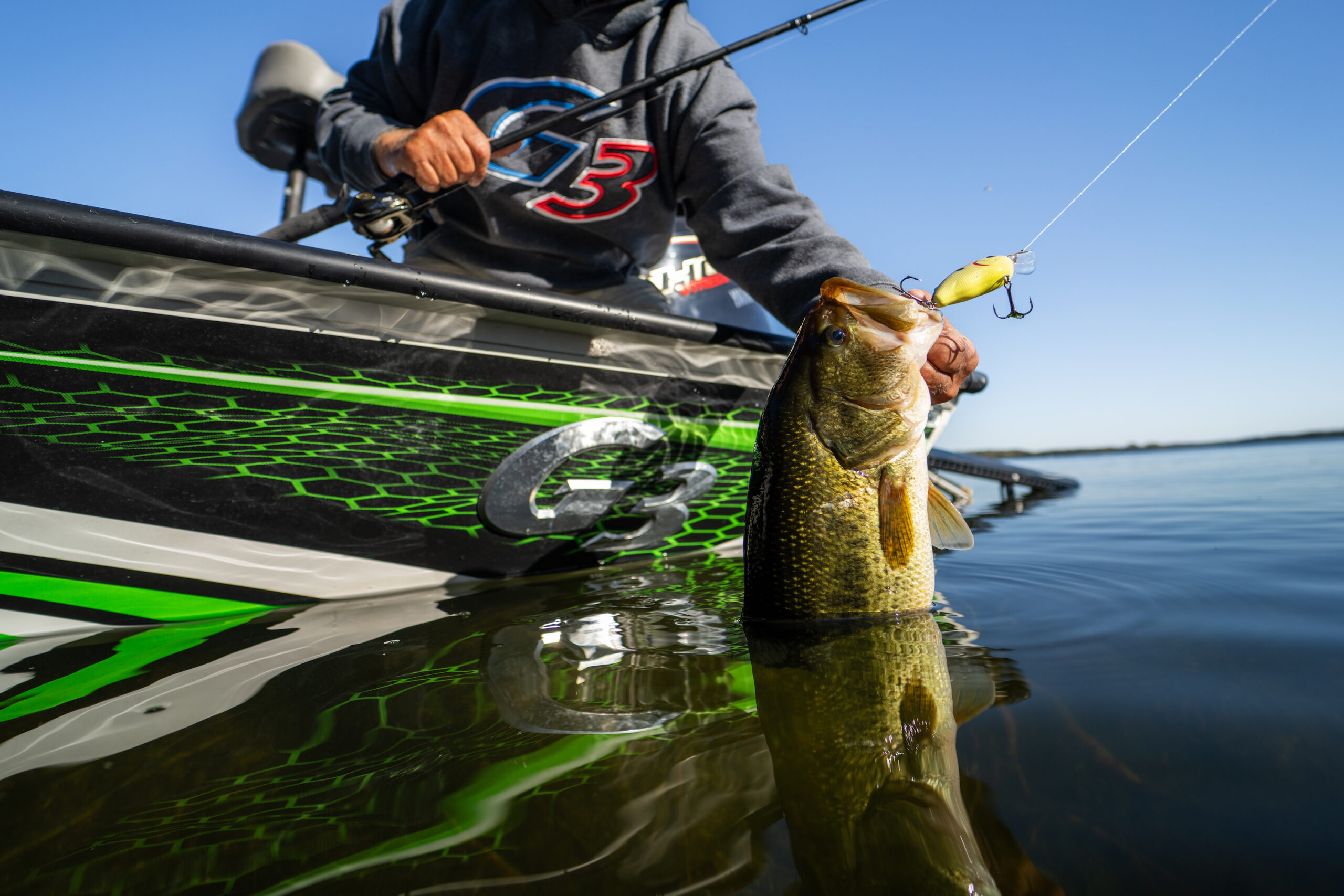
The concept of “matching the hatch” when fishing refers to using lures that are similar in color to the forage that game fish are feeding on. Matching the hatch can be important when bass fishing. Here are three examples from my fishing last summer.
In July, we were in northern Minnesota fishing Pelican Lake near Orr. Pelican Lake is a world class fishery for both largemouth and smallmouth bass. Adam Van Tassell owns Birch Forest Lodge on the lake, is an expert fisherman, and joined us for a couple days on the water. When Adam mentioned that we would be targeting rock to weed transitions and that the lake’s bass were crayfish eaters, I knew what bait I would be starting with.
A skirted bass jig with a plastic trailer can be worked along bottom to mimic a crayfish. However, what was important were the jig style, the trailer used, and the colors of those two. A Denny Brauer Structure Casting Jig has a unique shaped head that allows the bait to wobble through and over cover. A Rage Craw has realistic, high action pincers that create a great deal of disturbance to mimic a crayfish. Completing the puzzle, however, was using those two baits in the “Bama Craw” color pattern which is the perfect crayfish color imitator. Making long casts to the rocks and slowly working the jig along bottom to the weed transitions led to a bunch of bass weighing up to around five pounds.
Late summer and fall found me on the lakes near my home in the Alexandria, MN area. “Alex” is another area known for its top bass fishing, with lots of lakes offering excellent largemouth numbers, with some bonus smallmouth thrown in for good measure. These lakes are home to good weed growth and lots of largemouth bass that roam those weeds. Also roaming the weeds are bluegills, a forage that largemouth love!
Much of my late summer fishing revolved around targeting weedy flats where the weeds were starting to die, allowing me to work baits over the top of and through the now sparser vegetation. A Tungsten Thunder Cricket vibrating swim jig fished on long casts and quick retrieves is a great way to mimic a bluegill and trigger bass to bite and was my “go to” at this time. Keys to lure selection were bait size, a ½-ounce model worked well, and again, color choice. I used a “bluegill” patterned Cricket and tipped it with a Blade Minnow plastic, again in the “bluegill” color pattern. This combination led to several days of very good numbers of bass caught, with several in the 3- to 4-pound category.
As the weed died even more and fall set in, I continued throwing the vibrating swim jig but now was able to add crankbaits to my lure selections. Crankbaits and their accompanying treble hooks can be difficult to fish over weedy flats during summer, but as fall sets in and weeds die even more, they become big-time players in the bass catching game.
For crankbait fishing over the tops of shallow to mid-depth flats, I rely on squarebill baits a great deal. My squarebill choice for many situations is the KVD Elite 4.0. This bait deflects off cover and has a unique hunting action that attracts bass and triggers them to bite. Also, I like the bigger profile of the 4.0 size because it seems to attract bigger fish. As mentioned earlier, bass in weeds are bluegill eaters, but they also feed on juvenile perch roaming the vegetation. For that reason, I relied on a couple of match the hatch bait colors. Again, a bait pattern called “sunny” imitated the bluegills roaming the weeds and another called “pro phantom perch” imitated the perch. Alternating between the two baits allowed me to see which they preferred on any given day and to have several successful fall days on the water.
If more successful bass trips are your goal this season, consider “matching the hatch” on your trips and you can probably increase your fishing successes too!
As always, enjoy your time on the water and remember to include a youngster in your next outdoors adventure!
Mike Frisch co-hosts the popular Fishing the Midwest TV series. Visit www.fishingthemidwest.com to learn more.
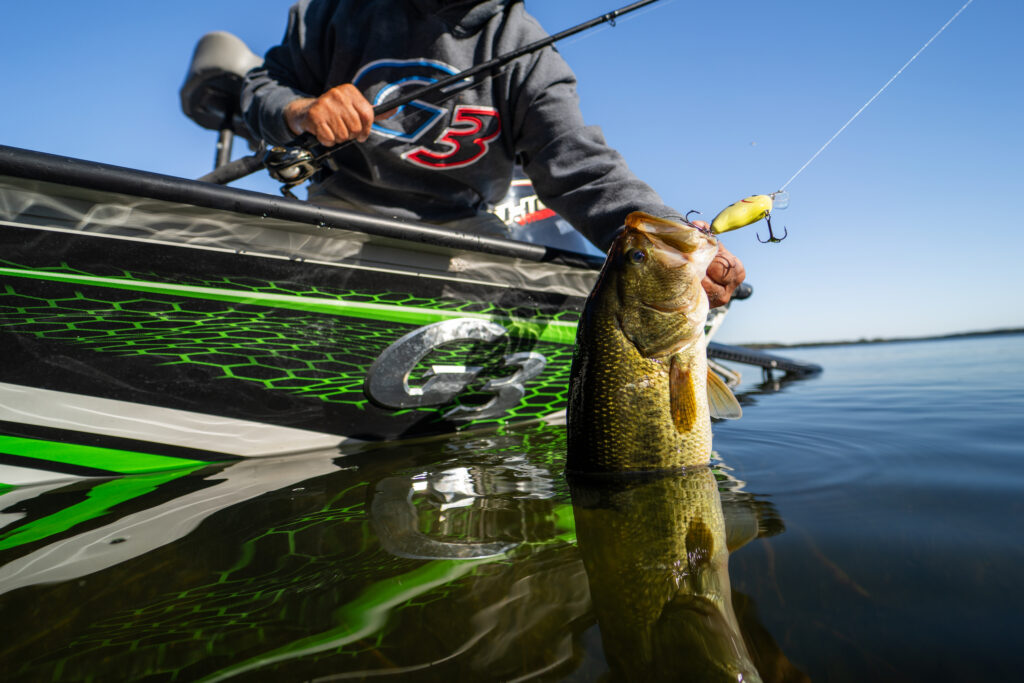
PHOTO – “Matching the hatch” can be important when bass fishing.