By Mike Frisch
One question I hear constantly from boaters and tournament anglers alike is: “Do the traditional walleye fishing techniques I’ve used for years still work, or has live sonar rendered them obsolete?”
This debate usually revolves around classic walleye presentations, jigging with live bait, pulling Lindy rigs tipped with leeches or nightcrawlers, and trolling crankbaits behind planer boards.
There is no denying that the fishing landscape has shifted dramatically. The widespread invasion of zebra mussels has created ultra, clear water in many popular Midwest fisheries, making fish more easily spooked by engine noise and hull shadows. Simultaneously, the explosion of Forward, Facing Sonar (FFS) technology, like Garmin Panoptix LiveScope™, Lowrance ActiveTarget®, and Humminbird MEGA Live—has completely changed how anglers target walleye.
Does old, school boat control still have a place on modern waters? The short answer is a resounding yes, if you know how to blend classic methods with modern electronics and the right boat platform.
The Evolution: Vertical Presentations vs. Target Casting
Back “in the day,” walleye fishing followed a reliable seasonal playbook:
- Spring: Jigging with minnows along shallow structure.
- Summer: Pulling live bait rigs or trolling crankbaits over deep mud flats and basin edges.
- Fall: Returning to heavy jigs and large minnows on steep drop offs.
Historically, these traditional walleye setups relied on positioning the boat directly over or just ahead of the school. But when live sonar emerged, anglers realized they could spot individual fish roaming 30, 40, or 50 feet out in front of the bow.
| Presentation Style | Traditional 2D & Down Imaging | Forward, Facing Sonar (FFS) |
| Boat Positioning | Passes directly over/near fish | Stays back 30–50 ft from targets |
| Primary Method | Vertical jigging, trolling, bottom bouncers | Precision target casting |
| Ideal Conditions | Choppy water, deep schools, active feeding | Ultra, clear water, roaming solitary fish |
| Skill Requirement | Easy for beginners & guided clients | High casting accuracy & screen reading |
By casting long distances to target fish before the boat drifted over them, anglers eliminated boat spook on clear lakes. Casting soft, plastic jerkbaits, hair jigs, and slip, bobber rigs directly to individual fish quickly became the go, to tournament strategy.
While FFS is a game, changer, relying solely on live sonar casting isn’t always the fastest way to put fish in the livewell.
🚢 G3 BOAT FEATURE CALLOUT: Built for Modern Electronics & Big Water
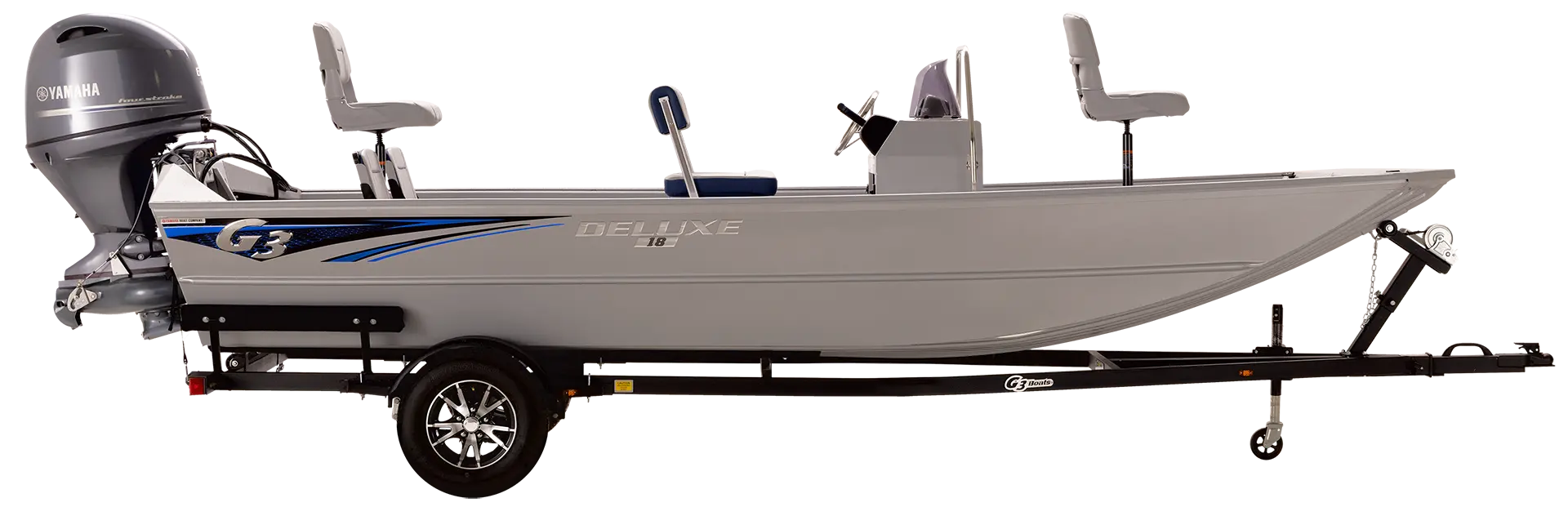
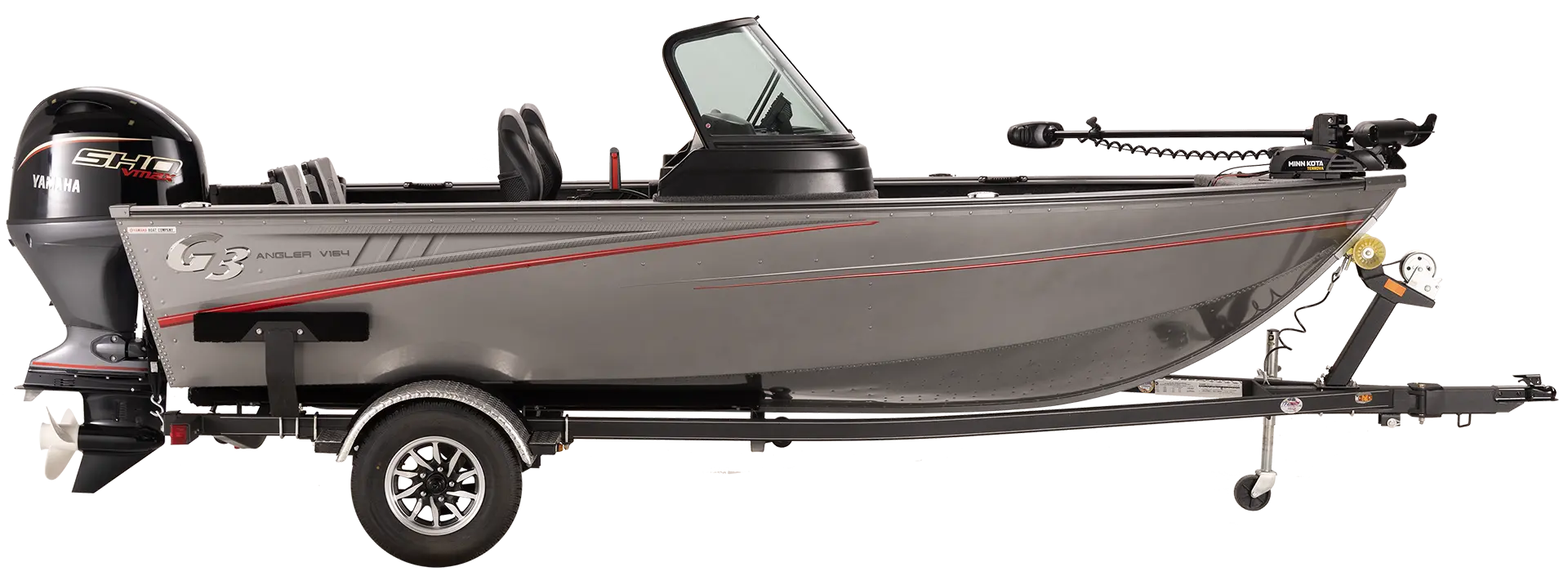
G3 Angler V Series (17 to 21 Foot Models)
- Wide Command Center Consoles: Built with wide ledges engineered specifically to flush, mount or bracket, mount 9” to 12”+ marine electronics (Humminbird®, Garmin®, Lowrance®).
- Double, Plated Bow Construction: Features a dual .080 gauge bow design to slice through heavy walleye chop smoothly while keeping passengers dry.
- Dual Aerated Livewells: Keep your catch healthy with timed, aeration bow and stern livewell systems.
Explore the G3 Angler V Series Lineup >>
Real, World Proof: When “Old School” Outperforms FFS
Can you still catch walleyes using classic techniques in modern, highly pressured waters? Absolutely. Here is how blending old, school tactics with modern boat control delivered results across three very different trips earlier this summer:
1. The FFS Pitching Pattern
Earlier in the season, a partner and I dialed into a great live, sonar bite. We used FFS to spot big walleyes roaming open, water basins and cast 3X Z, Man Z, Too plastics on light jig heads directly to target fish. It was fast, paced, highly visual, and effective for active, solitary fish.
2. Trolling Crankbaits for Scattered Basin Fish
Just a few days later on a different body of water, I guided a pair of beginner clients. We found scattered walleyes across a massive basin. Because my clients lacked the casting precision required for FFS targeting, we pivoted.
We broke out the trolling rods, tied on Salmo Hornets, and deployed Off Shore Tackle planer boards to spread our lines wide across our G3 Angler V19 FS. Trolling covered maximum water, kept lines away from the boat, and produced a full limit of walleyes without requiring pinpoint casting skills.
3. Bottom Bouncing on Classic Structure
The following week, we searched a steep drop, off edge along a large point using traditional 2D sonar and Down Imaging. We located a tight school of walleyes holding close to the bottom in 20 to 22 feet of water.
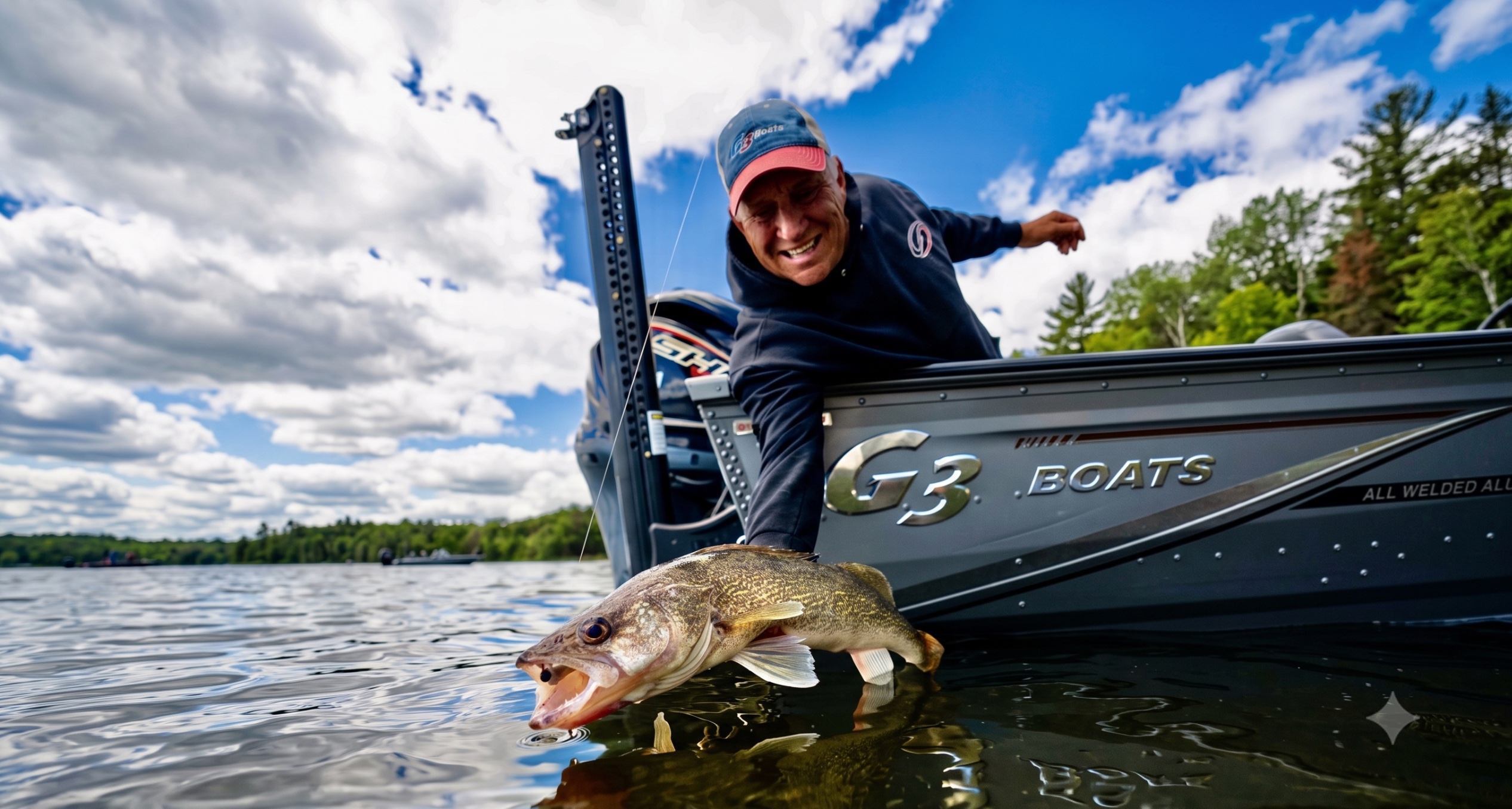
Even though the lake had high water clarity, a steady “walleye chop” covered the surface, dampening light penetration and engine sound. I knew our G3 Deep V hull could pull bottom bouncer rigs tipped with nightcrawlers directly over the school without spooking them. My hunch paid off, and my clients filled the livewell with prime “eater” walleyes.
🎣 G3 BOAT FEATURE CALLOUT: Trolling & Rigging Efficiency
G3 Gunnel Track Accessory System & Lockable Rod Storage
- Integrated Accessory Tracks: Easily mount and adjust Downriggers, Folbe®, or Cisco® rod holders along the gunnels for precision planer board trolling.
- Lockable Center Rod Storage: Safely store up to 8′ trolling and rigging rods out of the way when shifting between techniques.
- Yamaha Outboard & Kicker Integration: Factory, rigged with Yamaha primary outboards (up to 200 HP) and optional Yamaha T9.9 kicker motors for precise slow, trolling speeds.
Configure Your Custom G3 Angler V Boat >>
The Verdict: Versatility Wins on the Water
Forward Facing Sonar and clear water have undoubtedly changed the way we approach walleye fishing, but they haven’t rendered classic tactics obsolete.
The most successful anglers aren’t those who rely exclusively on a live, sonar screen, nor are they the ones who refuse to embrace new technology. They are the versatile boaters who use live sonar as one tool in the toolbox, adapting their approach based on wind, water clarity, angler skill level, and fish behavior.
Whether you’re casting soft plastics at individual targets on FFS or pulling bottom bouncers along a wind, blown point in an all, welded G3 Deep V, “old school” still gets it done!
Good luck on the water, adapt to what the fish are telling you, and remember to introduce a youngster to your next outdoor adventure.
Mike Frisch is the host of the popular Fishing the Midwest TV series and a long- time promotional partner for G3 Boats.